1
/
of
15
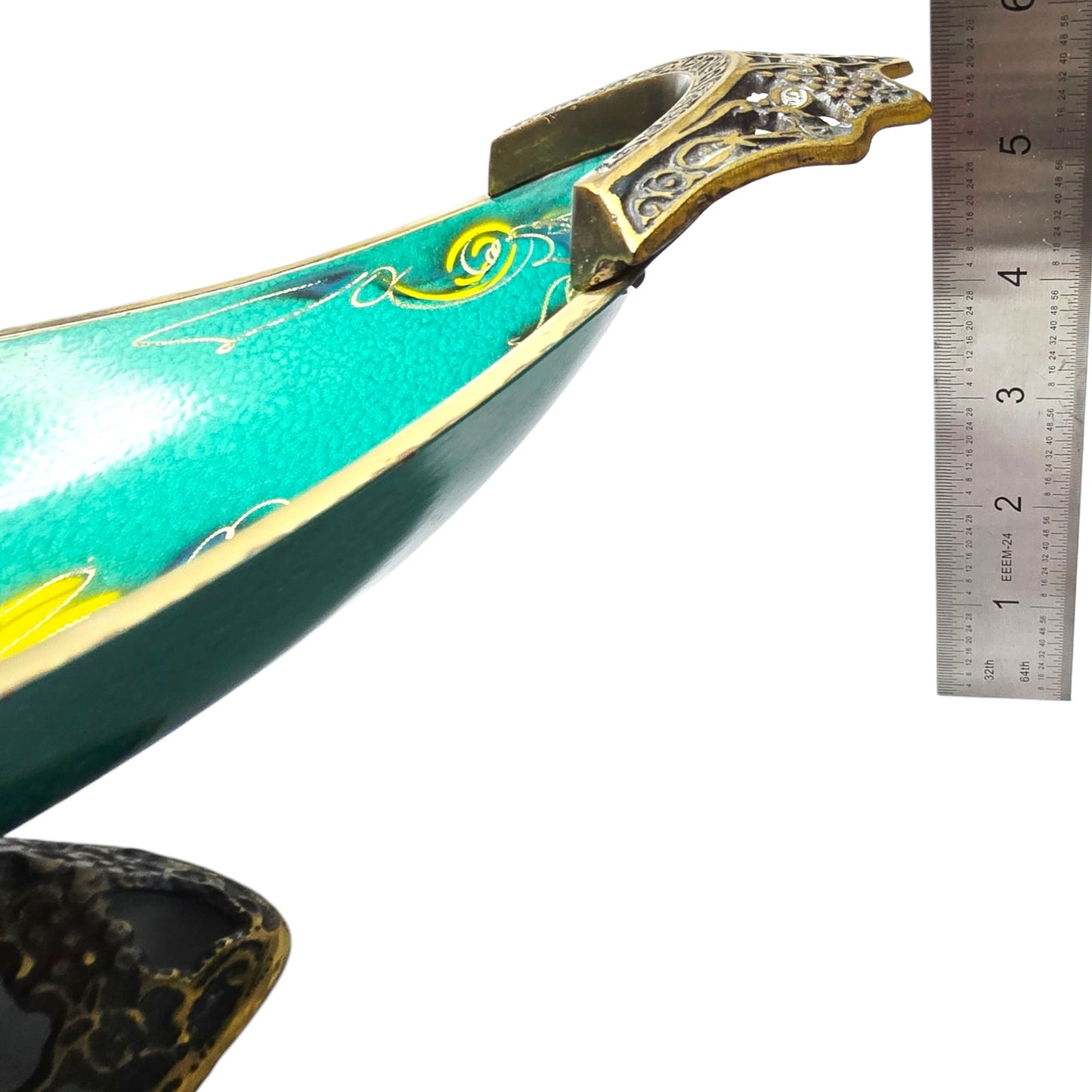
Vintage Israel Enameled Brass Tray Ornate MCM Mid Century Judaica17"
Regular price
$55.00 USD
Regular price
$0.00 USD
Sale price
$55.00 USD
Unit price
/
per
Shipping calculated at checkout.
Couldn't load pickup availability
17" W
Description
Origin: Made in Israel (marked on the back or handle).
Material: Hand-painted enamel over solid brass.
Design: Features a highly ornate, detailed pattern [describe the center, e.g., Twelve Tribes, Jerusalem, or Floral].
Features: Often includes integrated handles and a "verdigris" or "patina" style finish that combines the warmth of the brass with the vibrant enamel.
Condition: Excellent vintage condition. No significant chips to the enamel; the brass on the reverse shows a beautiful authentic age.
During the 1950s and '60s, a movement called "Israeliana" metalwork became huge. Makers like Dayagi, Oppenheim, and Pal-Bell specialized in using brass as the base because it was sturdy and looked like gold when polished, but they would "cold enamel" or hand-paint the colorful sections (often in turquoise, deep greens, or blues).
The reason these are so ornate is that they were originally intended as "Aliyah" or tourist gifts. In the early days of the State of Israel, the government encouraged the production of these artistic metal goods to build the local economy. The specific blue-green enamel used is often called "Eilat Stone" style, meant to mimic the color of the semi-precious stones found in the King Solomon Mines in southern Israel.

Description
Origin: Made in Israel (marked on the back or handle).
Material: Hand-painted enamel over solid brass.
Design: Features a highly ornate, detailed pattern [describe the center, e.g., Twelve Tribes, Jerusalem, or Floral].
Features: Often includes integrated handles and a "verdigris" or "patina" style finish that combines the warmth of the brass with the vibrant enamel.
Condition: Excellent vintage condition. No significant chips to the enamel; the brass on the reverse shows a beautiful authentic age.
During the 1950s and '60s, a movement called "Israeliana" metalwork became huge. Makers like Dayagi, Oppenheim, and Pal-Bell specialized in using brass as the base because it was sturdy and looked like gold when polished, but they would "cold enamel" or hand-paint the colorful sections (often in turquoise, deep greens, or blues).
The reason these are so ornate is that they were originally intended as "Aliyah" or tourist gifts. In the early days of the State of Israel, the government encouraged the production of these artistic metal goods to build the local economy. The specific blue-green enamel used is often called "Eilat Stone" style, meant to mimic the color of the semi-precious stones found in the King Solomon Mines in southern Israel.
Share